Tuesday, 9 February 2010

Call Sheet For Contemporary Film Noir Opening
Location: Cameron Mears' house, Shafto Road.
Directions: From town, go to Norwich Road all the way down to Bramford Road, which you follow straight to Shafto Road.
Call Times
Meet in town with equipment at 4pm.
Travel to Camerons house and get there by 4:30pm
Shooting begins at 4:45pm
Expected to end by 10pm
Crew
Directing: shared role
Sound man: N/A
Production assistants: Shared role
Talent
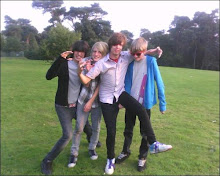
Cameron Mears : victim, deceased
Amy Meitiner: suspect, bullying victim
kira knight: suspect, jilted lover
Ben Halliday: suspect, drug dealer
Equipment:
Sony DV1 Camera
Standard tripod for Sony DV1 camera
Props
Alcohol, Sofa, Beds, Drugs, Ipod Docking System.
Second day of shooting
Date: Wednesday 10th March 2010
Location: Ben hallidays house, Holbrook
Directions: 92 bus from Cattle Market bus station, takes you straight there.
Call TimesMeet at Cattle Market bus station at 9am
Travel to Bens house and get there by 9:35am
Shooting begins at 10:00am
Expected to end by 4:00pm
Crew
Directing: Ben halliday and Amy Meitiner
Sound man: N/A
Production assistants: Shared role
Talent
Amy Meitiner: suspect
kira knight: victim, deceased
Ben Halliday: suspect
Sony DV1 Camera
Standard tripod for Sony DV1 camera
Props
Alcohol, Sofa, Beds, cigerettes,
by kira knight
by Kira Knight.
Storyline/synopsis for film noir opening
Nior Opening Editing treatment
Noir opening Mise En Scene Art Direction Treatment
Alcohol and cigarettes are typical of noir tendencies.The drugs and the ipod docking system give it a modern kick.
Costume and make up = casual everyday wear of young adults, with a noir flair. For example men dressed in darker shades of clothing. E.g. blacks, greys and dark blues. And women in red lipstick and red nails, dark seductive eys or even red clothing. Not all characters will dress like this, it will make the main suspects of the killing stand out. This will keep it to the noir feel but add the modern edge that is needed for this film opening.
Location = Camerons house- kitchen- bedroom- bathroom- study
Synopsis for nior opening.
By Amy Meitiner, producer.
Noir opening cinematography
Tuesday, 12 January 2010
Two Examples Of Modern Film Noirs

Sin City, 2005, Frank Miller & Robert Rodirguez
The film is primarily based on three of Miller's works: The Hard Goodbye, about a man who embarks on a brutal rampage in search of his one-time sweetheart's killer, The Big Fat Kill, which focuses on a street war between a group of prostitutes and a group of mercenaries, and That Yellow Bastard, which follows an aging police officer who protects a young woman from a grotesquely disfigured serial killer.
Sin City opened to wide critical and commercial success, gathering particular recognition for the film's unique coloring procession, which rendered most of the film in black and white but retained or added coloring for select objects.

Neo-Noir

Two Examples Of Classic Film Noir

Double Indemnity, 1944, Billy Wilder.
Walter Neff is a successful insurance salesman, returning to his office building late one night. Neff, clearly in pain, sits down at his desk and tells the whole story for his colleague Barton Keyes.
He first meets the sultry Phyllis Dietrichson during a routine house call. A flirtation develops, at least until Neff hears Phyllis wonder how she could take out a policy on her husband's life without him knowing it. Neff realises she intends to murder her husband and wants no part of it.
Phyllis pursues Neff to his own home, and persuades him that the two of them, together, should kill her husband. Neff knows all the tricks of his trade and comes up with a plan in which Phyllis's husband will die an unlikely death, in this case falling from a moving train.
Keyes, a tenacious investigator, does not suspect foul play at first, but eventually concludes that the Dietrichson woman and an unknown accomplice must be behind the husband's death. The victim's daughter, Lola, comes to him convinced that her stepmother Phyllis is behind her father's death.
When Neff and Phyllis meet, she tells him she has been seeing Lola's boyfriend only to provoke him into killing the suspicious Lola in a jealous rage. Neff, now wholly disgusted, is about to kill Phyllis when she shoots him first. Neff is badly wounded but still standing and walks towards her, telling her to shoot again. Phyllis does not shoot and he takes the gun from her. She says she never loved him "until a minute ago, when I couldn't fire that second shot" and had been using him all along.
Phyllis hugs him tightly but then pulls away and looks pleadingly at him when she feels the gun pressed against her side. Neff says "Goodbye, baby," then shoots twice and kills her.
Neff drives to his office where he dictates his full confession to Keyes, who arrives and hears enough of the confession to understand everything. Neff tells Keyes he is going to Mexico rather than face a death sentence but collapses to the floor before he can reach the elevator.

That night, Spade is informed that Archer has been killed. He tells his secretary Effie Perrine to break the news to Archer's wife, Iva. He meets his friend, Detective Tom Polhaus at the murder scene. Spade tells Polhaus that Archer was tailing Thursby. Spade then calls Wonderly’s hotel, but she has checked out. They also inform Spade of the death of Thursby that same evening. Dundy suggests that Spade had the opportunity and motive (Archer's wife) to commit both crimes.
The next morning, Spade has to fend off an amorous Iva. He then meets with Wonderly, now calling herself Brigid O’Shaughnessy. She explains that Thursby was her partner and probably killed Archer, but claims to have no idea who killed Thursby. Spade agrees to investigate the murders.
At his office, Spade meets Joel Cairo , who first offers him a $5,000 fee to find a “black figure of a bird”, then pulls a gun on him in order to search for it. Spade manages to knock Cairo out and go through his belongings.
Later that evening, Spade tells Brigid about his meeting with Cairo. When Cairo shows up, it becomes clear that Spade's acquaintances know each other. When Brigid insults Cairo, he tries to pull a gun on her, but Spade slaps him down. Polhaus and Dundy arrive to question Spade again. The two police detectives barge into the office when they hear Cairo's cry for help, and are given conflicting accounts about what happened. To avoid trouble, Cairo retracts his story.
the morning, Spade goes to Cairo's hotel, where he spots Wilmer, the man who had been following him earlier. He gives Wilmer a message for his boss. Spade meets Gutman in his hotel suite. Gutman begins to talk about the Falcon, but becomes evasive, causing Spade to storm out, giving Gutman a deadline to be more forthcoming.
Later, Spade is taken by Wilmer to Gutman at gunpoint. Spade overpowers him, but meets with Gutman anyway. Gutman relates the checkered history of the Maltese Falcon. "Well, sir," Gutman says, "they got it, but I haven't got it." Gutman offers Spade $25,000 for the bird and a fourth of the proceeds from its sale. Wilmer kicks Spade in the face, before he, Gutman and Cairo (who had been in the other room) depart.
When Spade revives, he searches the suite and finds a newspaper with the arrival time of the freighter La Paloma circled. When he arrives at the dock, the ship is on fire, so he returns to his office. A man bursts in and staggers toward Spade, clutching a bundle wrapped in newspaper, before collapsing and dying. The contents of his wallet identify the dead man as Captain Jacobi of the La Paloma. Looking inside the bundle, Spade tells Effie, "We’ve got it, angel. We’ve got it."
When Effie answers the phone, she hears Brigid give an address and then scream before the line goes dead. Spade first stashes the package in a bus terminal baggage room, before going to the address. After it turns out to be an empty lot, Spade returns home and finds Brigid hiding in a doorway. When he takes her inside, he finds Gutman waiting for him, guns drawn. Gutman gives Spade $10,000 for the Falcon.
Just after dawn, Spade calls Effie, who brings him the bundle. In a frenzy, Gutman, Cairo and Brigid unwrap it, revealing a black statuette: the Maltese Falcon. However, when Gutman inspects the bird, he cries out, "It's a fake!" When Gutman recovers from his disappointment, he suggests that he and Cairo return to Istanbul to continue their quest. He takes back the money he paid Spade at gunpoint, all but $1,000 for his "time and expenses", and tries unsuccessfully to recruit Spade.
After Gutman and Cairo leave, Spade calls the police and tells them where to pick up the pair. Spade then angrily confronts Brigid, telling her he knows she killed Archer to implicate Thursby, her unwanted accomplice. Brigid cannot believe that Spade will turn her over to the police, but he is deadly earnest. Spade turns over the fake Falcon, the money Gutman gave him, and last of all, Brigid. Polhaus picks up the statuette and asks what it is. Spade replies, "The stuff that dreams are made of."
Monday, 11 January 2010
Characteristics Of A Film Noir

Typically in Film Noir protagonists are almost invariably men, usually detectives or criminals characterized by pessimism, self doubt, or a cold, detached view of the world. Women are usually sexually alluring but treacherous, leading the protagonists into danger for their own selfish needs. The common setting for a film noir would be a big city, especially at night; shiny, rain-slicked pavements, dark alleyways and sleazy bars. Many of the films use distinctive high and low angles, low key lighting, extreme wide angle lenses and location shooting.
A Breif History Of Film Noir

Film noir is a term used to describe Hollywood crime dramas which are mainly fuelled by cynical attitudes and sexual motivations , the term means “black film” in French due to them usually being dark and in black and white, this was most popular around the 1940s and the 1950s this was known as the classic period for film noir. Most of the Film noirs of the classic period were low and modestly budgeted features without major stars . Film Noir gets its roots from German expressionism cinematography, but get many of the stories from the hardboiled school of crime fiction that emerged in America during the depression around the 1930s. The term film noir was applied by French critics in 1946 to a group of U.S films made during the war and released abroad in quick succession after 1945.